
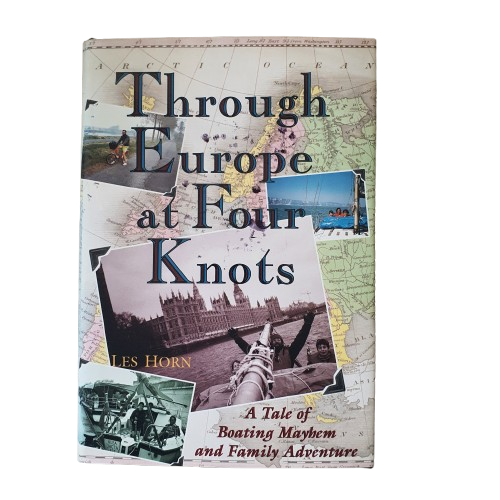
Through Europe at Four Knots
NZ$39.95
Through Europe at Four Knots
By Les Horn
Historical Significance
Through Europe at Four Knots represents a significant contribution to the literature of inland waterway exploration during the mid-20th century. Authored by Les Horn, the narrative documents a period when the vast network of European canals and rivers was transitioning from its industrial heritage toward recreational utility. Traveling at the leisurely pace indicated in the title, Horn provides a meticulous, observational account of the maritime infrastructure—locks, quays, and towpaths—that defined the continental interior before the era of modern high-speed infrastructure.
The work is valued by maritime historians not only for its travelogue qualities but for its technical record of the vessels and navigational challenges of the time. Horn’s writing captures the nuances of handling a small craft within the constraints of commercial barge traffic, offering scholarly insights into the "slow-speed" philosophy of voyaging. For the collector, this volume serves as an evocative record of a European maritime landscape that has since been significantly altered by modernization and administrative centralization. It is a vital addition to any library focused on the art of long-distance cruising in confined waters.
Key Maritime Themes
Inland Waterway Navigation: Detailed observations on the mechanics of canal locks, weirs, and river current management.
Canal Craft Design: Technical considerations for low-displacement vessels operating in shallow, restricted channels.
Maritime Sociology: The evolving relationship between professional bargees and the emerging class of recreational cruisers.
Navigational Ethics: The discipline of low-speed voyaging and its impact on vessel maintenance and endurance.
Historical Infrastructure: A record of the post-war state of European hydraulic engineering.
Geographic Relevance
While the primary geography of this work is European, its principles are highly relevant to the New Zealand mariner interested in the global history of waterborne transport. For those in NZ who study the development of colonial river trade—such as the historical use of the Waikato or Wanganui rivers—Horn’s work provides a comparative academic framework for understanding how older maritime cultures adapted their waterways for secondary use. It offers a sophisticated perspective on the "slow-water" traditions that influenced early New Zealand maritime settlers of European descent.
Condition
Used hardback in very good condition. With dust jacket. Published in 2000. 296 Pages.